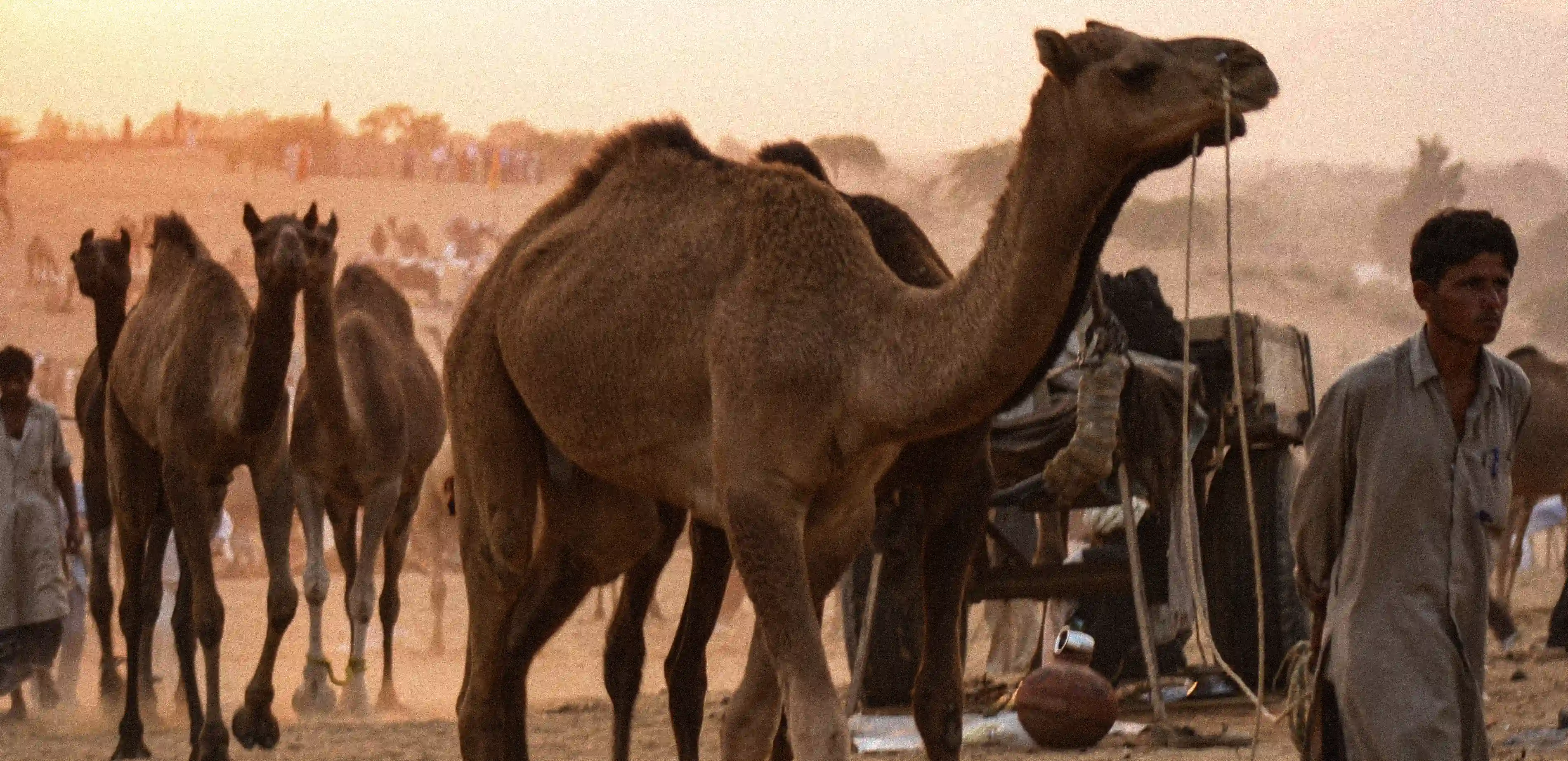
The Pushkar Camel Fair as we know it
We were there first. We’ll tell the truth.
For 16 years, until 2019, we pitched Camp Bliss on a sandy farm at the edge of the fair. We woke to camel bells, to bargaining over chai, to families who had walked for days with their animals.
Pushkar has changed. The official fair is now crowds, Ferris wheels, stadium shows and cameras. Most people who sell it will not tell you that.
The real fair has not gone. It has moved to the edges and the margins. The animal fair is still where people are most relaxed and most open to a conversation, and the first light of morning still belongs to the herders.
There is no VIP pass to this fair. Everything happens because people want it to, and you can join its rhythm like anyone else.
Want us to arrange it for you? See our luxury Pushkar Camel Fair tours or read about the fair programme.
Pushkar Camel Fair
Your Visitor Guide
Getting around the Pushkar Camel Fair
Generally, the crowd is maximum at 2 spots- around the Brahma Temple and the Gau Ghat where the famous malpua sweet makers have their shops. The Jaipur Ghat and Varaha Ghat are the two spots where you can reach from the highway using the tuktuk. On quieter days, it’s even possible to reach till the backside of Brahma Temple.
In the Fair Ground, the Horses section comes first and it takes more area. Walk further till you reach the sand dunes where camels are kept. The Savitri Temple hill is right behind. A sandy track fit for camel cart ride goes to the town by completely bypassing the horses area. It meets the road near the Savitri Temple parking. It’s safe to walk on this track in sunlight hours. In other times, stick to the usual Brahma Temple road that goes through Horses area.
Depending on the crowd intensity of a particular day, vehicles arriving from the city of Ajmer will be allowed or disallowed to come closer to the Ajmer-Nagaur Road or the Pushkar bypass junction. Your hotel, if not located around the holy town, will require prearranged pickup and dropping. Most new and fancy hotels and resorts are located quite a distance away if road is taken which one must take for checking in or out. For other times, for visiting the Fair Ground and Mela Ground, commuting is relatively easier by walking and even better, by camel cart.
Pushkar Camel Fair survival guide
From years of walking the fair at every hour.
Take it slowly; the fair rewards it.
- Wear good shoesYou will be walking most of the time. Wear good shoes. You will have to remove your shoes on visiting temples and bathing ghats.
- Drink plenty of waterThe air is very dry. Carry water and keep drinking, even when you don’t feel thirsty.
- Dress fully and comfortablyLoose clothes that cover arms and legs keep off the sun and dust, and respect the pilgrims around you.
- Check the calendarCheck the calendar of events. It will take a while for you to walk from one venue to another.
- Go early to the animal fairStart early in the morning for the animal fair part. This will help you return by breakfast time in your hotel.
- Know the two animal areasThere is a vast difference in how you may feel as a photographer around the horses area and around the camels area. In the horses area, you’ll be invited to see inside and freely take pictures. The horses being checked for their quality by ride on the same road on which you are walking might sometimes need careful awareness of your surroundings.
- Traditional scene.In the camels area, the scene is more traditional. Turbaned buyers and sellers squat under the shadows of tethered camels to discuss the deals.
- Book your ride in advanceIt can be helpful to contract a reliable camel cart owner or tuktuk driver for the time of need. Their arrangements work well if timing is set in advance with them over their mobile phones.
- Step around the crowdsIt’s going to be very crowded at times, especially around the holy lake, Brahma Temple and the stadium area. There is no harm in waiting a while in a quieter spot for some time and letting it all go. Approaching from the side of old town, if you find the zone around Brahma Temple entrance highly crowded, take the side lane to bypass which will lead to the fair ground.
- Know where help isHelp from the authorities. Administration puts up a temporary control zone in a demarcated tented zone just next to the Stadium.
- Eat well, and wiselyGenerally food served in the restaurants around the holy lake is good. You may also try fresh malpua sweets made in the shops around Gau Ghat. There are a few rooftop restaurants which give a view of the Ghats. Probably they are the best spots to photograph the Ghats without offending anyone. Outside the holy town, there are very few restaurants which are safe for everyone’s stomachs. Avoid eating in the Ferris wheels and stadium area, those food are generally safe but can be best tolerated by the local stomachs.
- Respect the ghatsAvoid taking pictures of bathing women on the ghats. Be careful when visiting the Ghats where some people may persist on you on performing puja and give them donation. The Jaipur Ghat is the best Ghat where you may stroll freely and enjoy your time. There are a few sunset view cafes overlooking these Ghats. In the evening the scene is quite celebratory.
- Let it be too muchOverall, the scene might look overwhelming. Take it easy and slowly you’ll experience the things best suited to your interests.
- Eat before tenThings tend to get quiet around the night. Most good places to eat close around 10 pm.
Pushkar Camel Fair map and layout explained
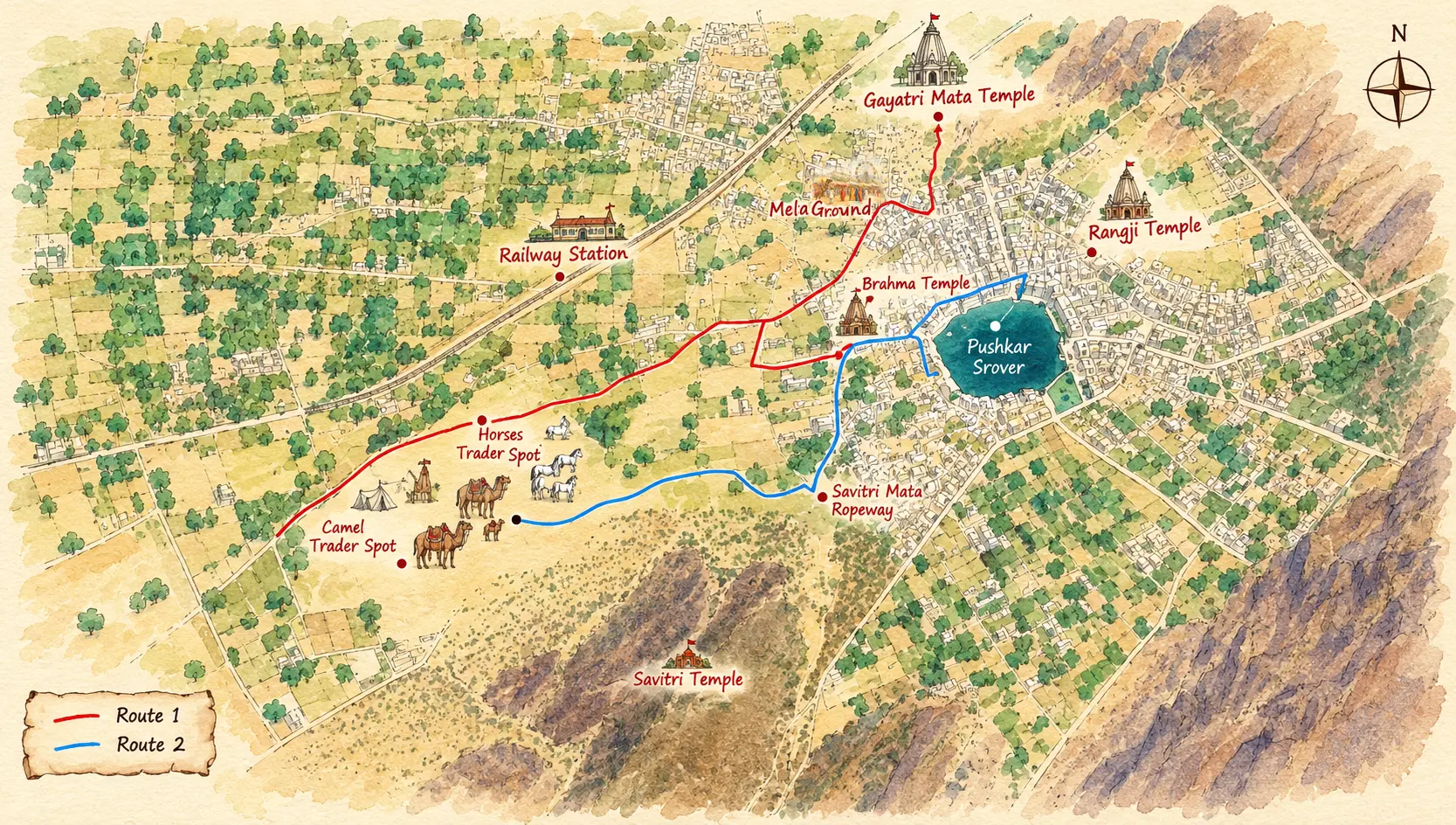
While nothing may fully prepare you for what surprises you find at every turn in the Fair and the spectacle in completeness may seem overwhelming, the bigger surprise is to discover that you are never actually lost. There are three broad sections to the spectacle- the holy Pushkar town, the Mela ground and the animal fair area. Plus you have vast areas on the periphery where there are many lodges, tented camps and resorts. The Savitri Temple on the spur of a conical standalone hill always remains a reference point.
How the fair works: nothing happens in isolation
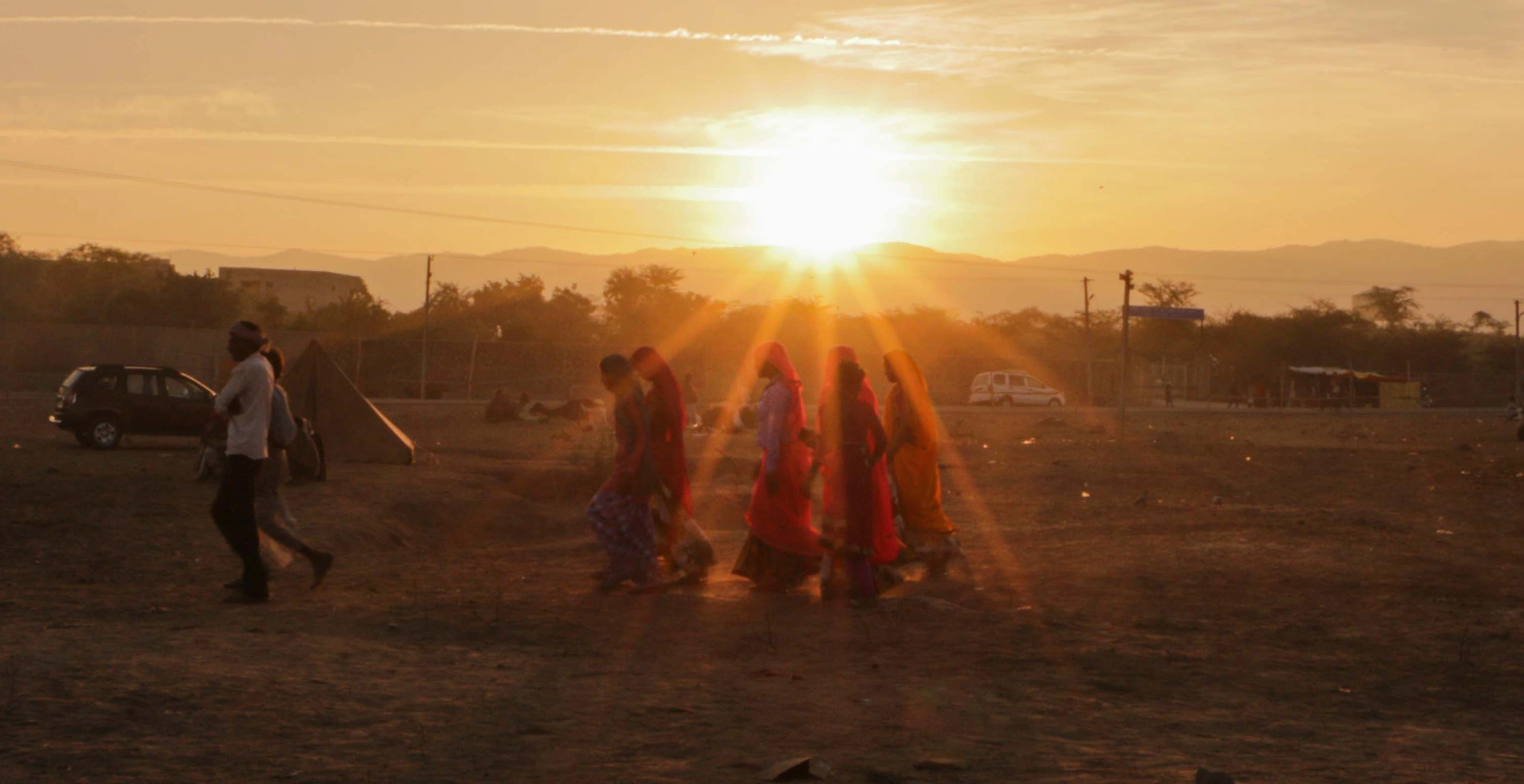
You will have to choose each time where you want to be at a particular time. Many things may happen at the same time. At the time of best sunlight in dusk for animal photography, certain processions may happen in the Holy town bazaar unannounced. Plus, there are advertised events like the Nagada drums playing on the edge of lake to lamp floating on a different ghat. Quite possibly something interesting is staged at the same time in the Stadium in the Mela Ground. You will also think that probably this was the best time to climb up to Savitri Temple. Even when you stay in Pushkar for a week you might feel that you have missed some to witness some. Great idea is to make the best use of the time of sunrise and sunset. As a rule of thumb, wake up early everyday and devote the first couple of mornings to get accustomed to the animal fair ground area. Things start getting easy from here. Going to the animal fair will require considerable walking or camel cart ride. This will make you understand the directions and reference points like the Savitri Temple Hill, giant Ferris wheels, the sky blue tin roof of the stadium, railway track, traffic intersection of animals where open water tank for their drinking is built and so on. It is in this area where you’ll find the people much relaxed and willing to interact. Just imagine if everything was not going at the same time. Then this Mela will not be a Mela but an orchestrated event. The Pushkar Mela is a strong example of how random energies combine to form a reservoir of entities in which anyone can take a dip. You might want to be soaked in this reservoir again and again as nobody stops you from doing anything. There is no premium category activity in Pushkar. No VIPs. Whatever that happens, happens because everybody wants it to happen. Things that happen, they happen in a rhythm and this rhythm is something that has to be sensed. Once you are part of this rhythm, your participation is as good as anybody’s.